Cardiovascular Disease Detection
Deep Learning for ECG-Based Diagnosis
Overview
This project focused on optimizing a convolutional neural network (CNN) to detect the presence of six different cardiovascular diseases from raw 12-lead electrocardiogram (ECG) signals. The goal was to improve diagnostic automation and to explore clinical decision-making in cardiology.
Clinical Significance
Cardiovascular diseases remain the leading cause of death globally. Early and accurate detection through ECG analysis can significantly improve patient outcomes. However, manual ECG interpretation is time-consuming and subject to inter-observer variability. Automated detection systems can:
- Provide rapid preliminary screening in high-volume settings
- Assist healthcare workers in resource-limited environments
- Reduce diagnostic delays in emergency situations
- Serve as a second opinion for complex cases
Technical Approach
Data Processing
- Processed and standardized a dataset of approximately 2.3 million ECG traces
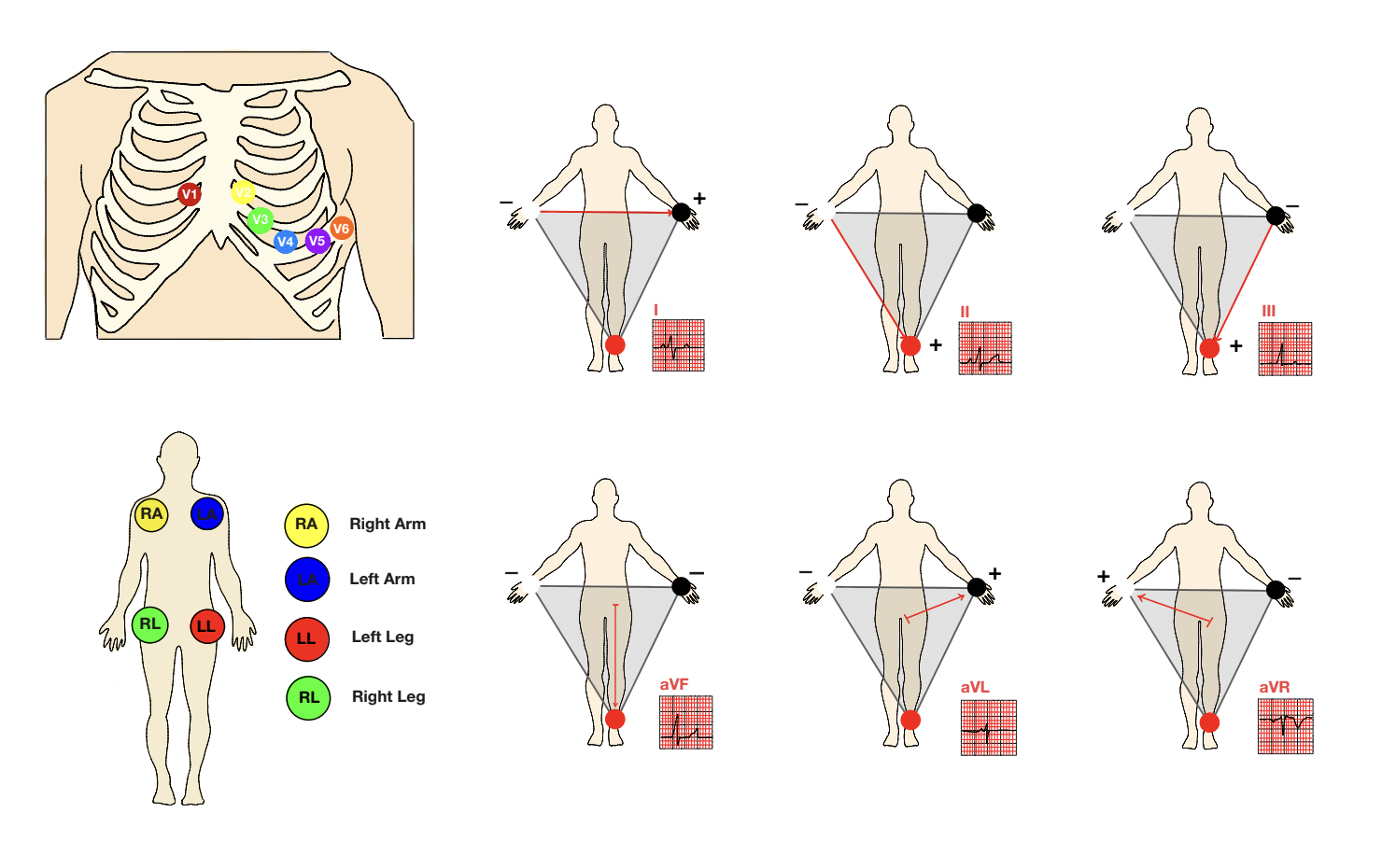
- Normalized scaling variations across 12-lead recordings from heterogeneous ECG machines
- Implemented robust preprocessing to handle artifacts and noise in clinical recordings
- Developed data augmentation strategies specific to physiological signals
Model Architecture
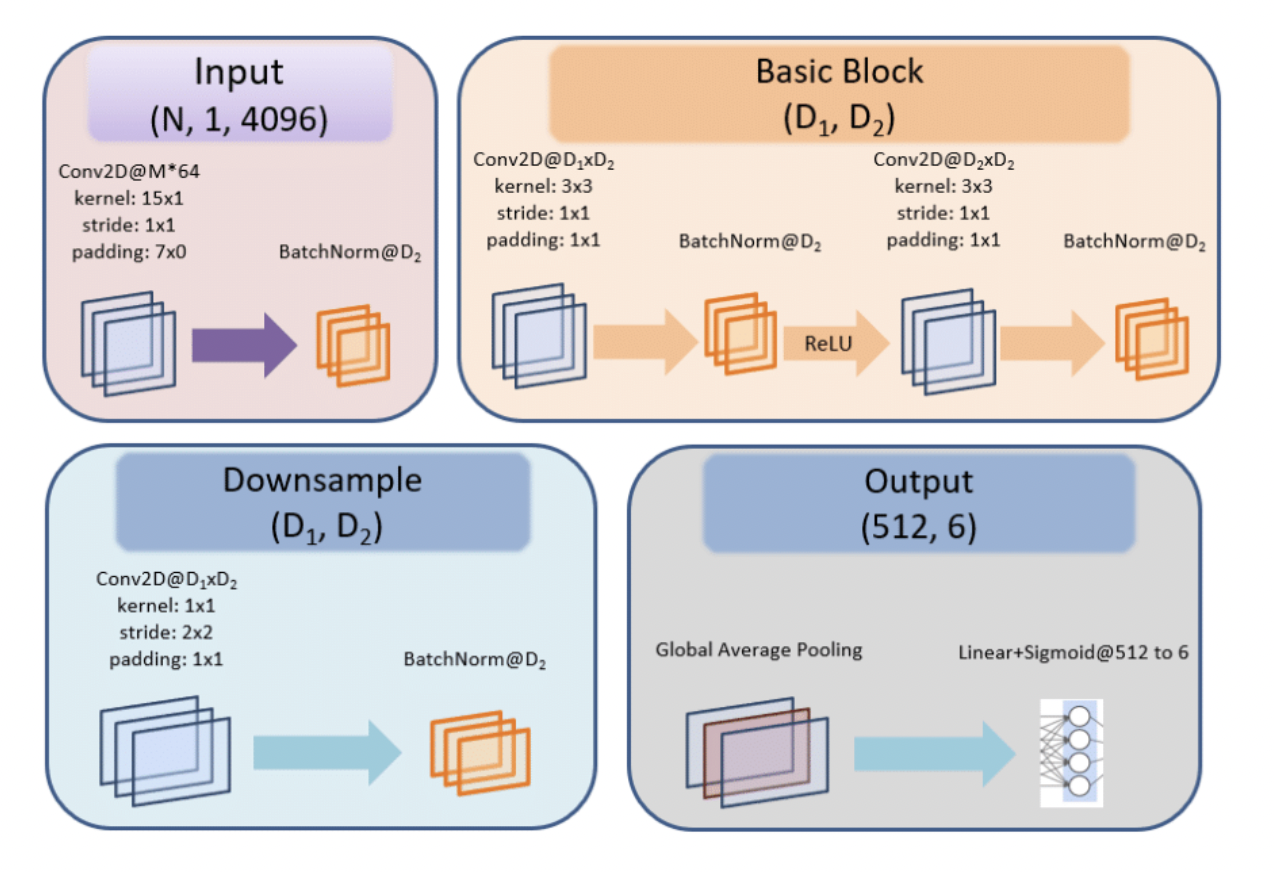
- Optimized a 1D CNN (implemented with Conv2D-style layers) for 4096-sample temporal signal classification using residual basic blocks and strided downsampling.
- Built a multi-label prediction head using global average pooling and a 512→6 linear layer with sigmoid activation to detect six cardiovascular conditions simultaneously.
- Evaluated interpretability methods to localize diagnostically relevant signal segments driving each label.
Feature Analysis
- Investigated feature importance across precordial leads (V1-V6)
- Analyzed contribution of limb leads (I, II, III, aVR, aVL, aVF)
- Mitigated multicollinearity in input signals to determine optimal channel configurations
- Performed ablation studies to understand model behavior
Results
The optimized model achieved an F1-score of 0.89, improving from the baseline of 0.83. This 7.2% improvement in diagnostic performance demonstrates enhanced model generalization and clinical applicability.